SKU: 38340026530
robellini palm plant

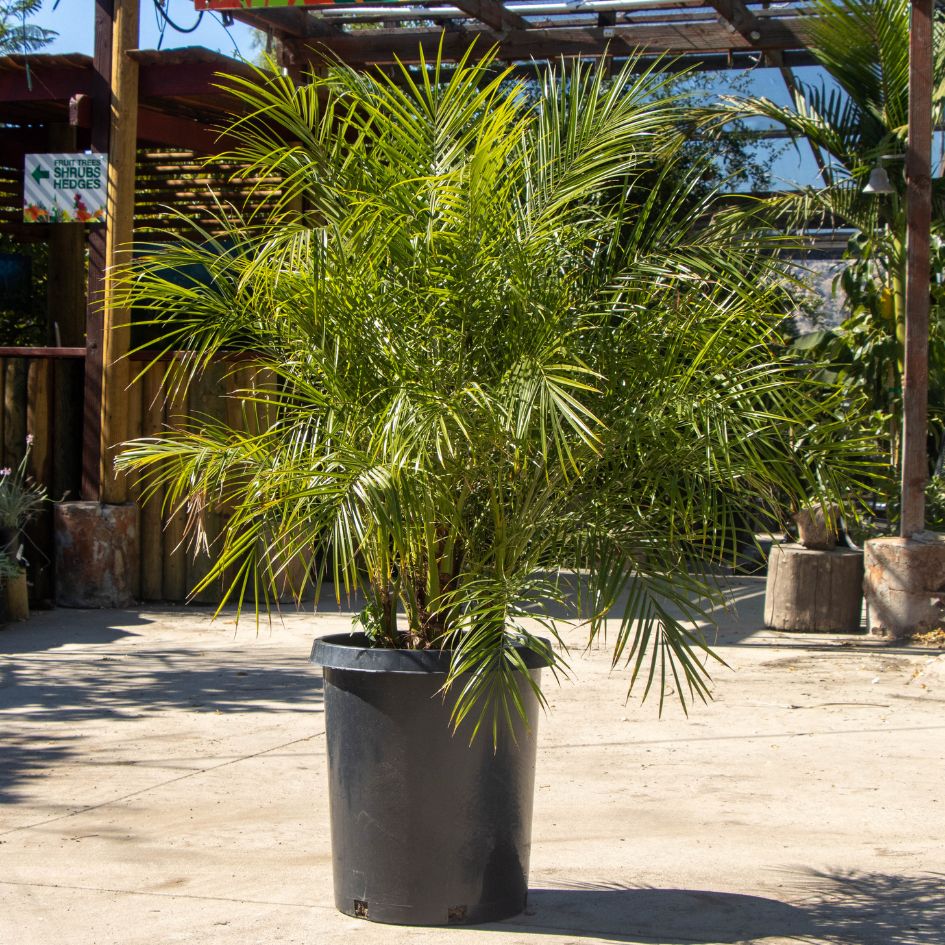
robellini palm plant Pygmy Date Palm - Phoenix Roebelenii

Sale price$24.15 Regular price$26.83
Save 10%

Pay in installments of $6.71 with ShopPay, AfterPay and Klarna

Shipping Estimate
USA
  • USA
  • CAN

Ships within 48 hours · Estimated delivery Jul 22 - Jul 27

Promo Codes Available:

For Your Every Summer RSVP, with Code: SUMMER15

Description

robellini palm plant Pygmy Date Palm - Phoenix RoebeleniiPhoenix Roebelenii, commonly known as the Pygmy Date Palm, is a slow growing, small palm species that is popular for its ornamental value. Native to Southeast Asia, it typically reaches a height of 6 12 feet, making it a great choice for small landscapes or indoor planting. The palm has feathery, arching fronds with a fine texture that adds a tropical appeal to any garden or interior space. It is ideal for growing in containers or as a focal point in

Phoenix Roebelenii, commonly known as the Pygmy Date Palm, is a slow-growing, small palm species that is popular for its ornamental value. Native to Southeast Asia, it typically reaches a height of 6-12 feet, making it a great choice for small landscapes or indoor planting. The palm has feathery, arching fronds with a fine texture that adds a tropical appeal to any garden or interior space. It is ideal for growing in containers or as a focal point in the garden.

Growth and Planting Conditions

  • Sunlight: Pygmy Date Palms prefer partial shade but can tolerate full sun. When grown outdoors, plant them in areas that receive filtered sunlight or light shade to prevent leaf burn.
  • Soil: These palms thrive in well-draining, sandy soils. They are adaptable to a wide range of soil types, as long as the drainage is good.
  • Temperature: Phoenix Roebelenii is best suited for USDA Zones 8-11. It can tolerate mild frost but should be protected from extended freezing temperatures.
  • Spacing: When planting multiple Pygmy Date Palms, space them about 4-6 feet apart to allow for proper air circulation and root growth.

Watering and Irrigation

  • Watering Schedule: Pygmy Date Palms require regular watering, especially when young. Water deeply once a week, allowing the topsoil to dry out slightly between waterings.
  • Summer Watering: During hot summer months, increase watering frequency, ensuring that the soil remains moist but not waterlogged.
  • Mulching: Apply mulch around the base of the palm to retain moisture and regulate soil temperature. Keep the mulch a few inches away from the trunk to avoid rot.

Fertilization

  • Fertilizer Type: Use a slow-release palm fertilizer with a balanced NPK ratio (e.g., 8-2-12 or 10-5-15) that contains micronutrients such as magnesium and iron, which are essential for palm health.
  • Application: Fertilize the palm 3-4 times a year, starting in early spring and continuing through late summer. Avoid fertilizing in the fall to prevent new growth during colder months.

Pruning

  • Timing: Prune dead or damaged fronds in late winter or early spring before the growing season begins.
  • Method: Remove fronds that are yellow or brown to maintain the plant’s appearance and overall health. Be cautious when handling the base of the palm, as it may have sharp spines.

Pest and Disease Control

  • Common Pests: Phoenix Roebelenii is susceptible to pests such as spider mites, scale, and mealybugs. Use neem oil or insecticidal soap to manage infestations.
  • Disease Prevention: Ensure proper air circulation and avoid overwatering to prevent fungal infections such as root rot or leaf spot. Regular pruning and removing dead fronds will also help maintain the palm's health.

History of the Phoenix Roebelenii (Pygmy Date Palm)

The Pygmy Date Palm, native to Southeast Asia, was introduced to the Western world in the 19th century. It quickly gained popularity due to its compact size, making it an ideal choice for indoor and patio gardening. Its elegant fronds and manageable height have made it a staple in tropical landscaping and as an ornamental feature for homes and public spaces. Although it doesn't produce edible dates like its larger relatives, its graceful appearance has made it a beloved palm variety worldwide.

Shipping Notes
  • Free Standard Shipping on $100+ Orders to the USA.
  • Except Preorder products are shipped in 48 hours.
  • Delivery to the USA:
  1. Standard Shipping : 3-10 business days
  • If time is of the essence, please consider selecting expedited delivery for faster service.
Exchange/Return Notes
  • We offer a 30-day return/exchange service after receiving.
  • Final sale items are not eligible for returns or exchanges.
  • To process your return/exchange, please contact us at [email protected]
  • Please click here for more details>>> Return & Exchange Policy
SKU: 38340026530

Discover Niche Categories That Outsell robellini palm plant

Top-Converting Item to Boost Your Average Order

4.8 ★★★★★
Based on 6 reviews
Sort
Highest Rating
Newest First
Oldest First
Product Reviews
J
Verified Purchase
John Keller
Omaha, US
★★★★★ 5
Don’t be intimidated...it's detailed, but systematic and rational
Format: Paperback
Don’t be intimidated by this 700-page tome. Once you factor in the bibliography, index and footnotes, the body of the work is only about 400 pages. Licona includes an all-important, detailed outline for quick reference back to key topics, and it’s valuable because of the variety of issues he tackles. I’d say, he does a wonderful job of giving us an objective, systematic approach to addressing the historicity of the events following Jesus’ crucifixion. Licona lays the groundwork for his examination of the issue by considering the philosophy of history and tackling things like what is truth, what makes something a historical fact, who has the burden of proof, and is history a science? As a needed addition to this philosophical introduction, he spends time outlining the methods he will use to approaching relevant texts, claims of miracles, and consensus facts. Most important, I think, to his methods was his self-examination of potential bias due to personal belief and worldview. He addresses what he calls a personal “horizon” that historians must be set aside in order to be objective and get at the truth. He certainly points it out in others along the way and makes it clear throughout the book that he is trying to identify and eliminate any potential bias he may bring to the process. In his investigation, he addresses the most important sources related to Jesus’ life, crucifixion and claims of the resurrection. He deals with both Christian and non-Christian sources that were written immediately following the events as well as within the following 200 years. Licona makes the case for authenticity and credibility of the most important sources, and where there have been challenges to these sources over the centuries, he addresses those challenges head on. Ultimately, he boils the events, claims, facts and sources down to what he calls the “bedrock” pertaining to the fate of Jesus. This bedrock consists of three facts that are well supported by authentic, textual evidence which enjoy nearly consensus support by all historians (both Christian and non-Christian). For Licona, the bedrock which need be answered are (1) Jesus’ death by crucifixion, (2) the claims Jesus appeared to individuals and groups following his burial, and (3) the conversion of the Church persecutor, Paul. Ultimately, Licona breaks down six different hypotheses which claim to explain the bedrock and he uses systematic criteria for weighing those hypotheses. He concludes that a resurrection is the best explanation but admits that it’s only by setting aside a naturalistic worldview that one can embrace the conclusion. I like Licona’s methodical approach but would offer two critiques. Do we really need all the Greek citations written out? I understand that there is nuance and variations in meaning for words that are used in the original sources, but to give us all the text and the translation seemed superfluous. Second, I think it was a cop-out to skim the importance of the empty tomb. Other historians put the fact of the empty tomb as one of their top facts to be explained, but Licona punted on it because he didn’t feel it received universal consensus. Consensus aside, the fact of the empty tomb does receive support by a strong majority of scholars, even ones that do not support the resurrection. This cross-section of scholarly support, along with the volume and type of textural evidence, namely the confirmation by Christian enemies, should have elevated the fact of the empty tomb to the “bedrock” which require explanation.
WAS THIS REVIEW HELPFUL?YesReportShare
Reviewed in the United States on April 12, 2021
E
Verified Purchase
Elly
Battle Creek, US
★★★★★ 5
so helpful
Format: Paperback
got for school and used it a lot its been so helpful
WAS THIS REVIEW HELPFUL?YesReportShare
Reviewed in the United States on February 3, 2026
E
Verified Purchase
E
Waukegan, US
★★★★★ 5
Great price...
Format: Paperback
Needed this for my EKG course. Price was right.
WAS THIS REVIEW HELPFUL?YesReportShare
Reviewed in the United States on February 1, 2026
L
Verified Purchase
LUCIOUS
New York, US
★★★★★ 5
Satisfied
Format: Paperback, Format: Paperback
Brand new got here on time, haven’t got to indulge in the content yet but definitely exactly what I ordered.
WAS THIS REVIEW HELPFUL?YesReportShare
Reviewed in the United States on May 10, 2025
B
Verified Purchase
Breanna Geyer
Waukegan, US
★★★★★ 5
EKGs are difficult and I still don’t understand
Format: Paperback
Hey I’m in nursing school and I bought this… it’s not the pocket size, it’s actually a full size book. It brought tears to my eyes many times. I have no idea what a 3rd degree block is. Hopefully you can learn and be a good nurse! EKGs are for the doctors to read. So don’t be too hard on yourself. But you should probably know what normal sinus rhythm looks like… 👍🏼
WAS THIS REVIEW HELPFUL?YesReportShare
Reviewed in the United States on January 22, 2024

recommand products